Best LSAT Prep Courses 2026: The Definitive Comparison
Here's something most pre-law students don't realize until it's too late: a single LSAT point can be worth tens of thousands of dollars in scholarship money at a T14 law school. Two points can flip you from a waitlist to an acceptance. The stakes compound.
So picking the wrong prep course isn't just a minor inconvenience. It's a decision with a real dollar value attached — which means it deserves more thought than reading one listicle and clicking the first sponsored result.
What Changed About the LSAT (Read This First)
Before comparing any courses, there's one piece of context that changes your entire prep strategy.
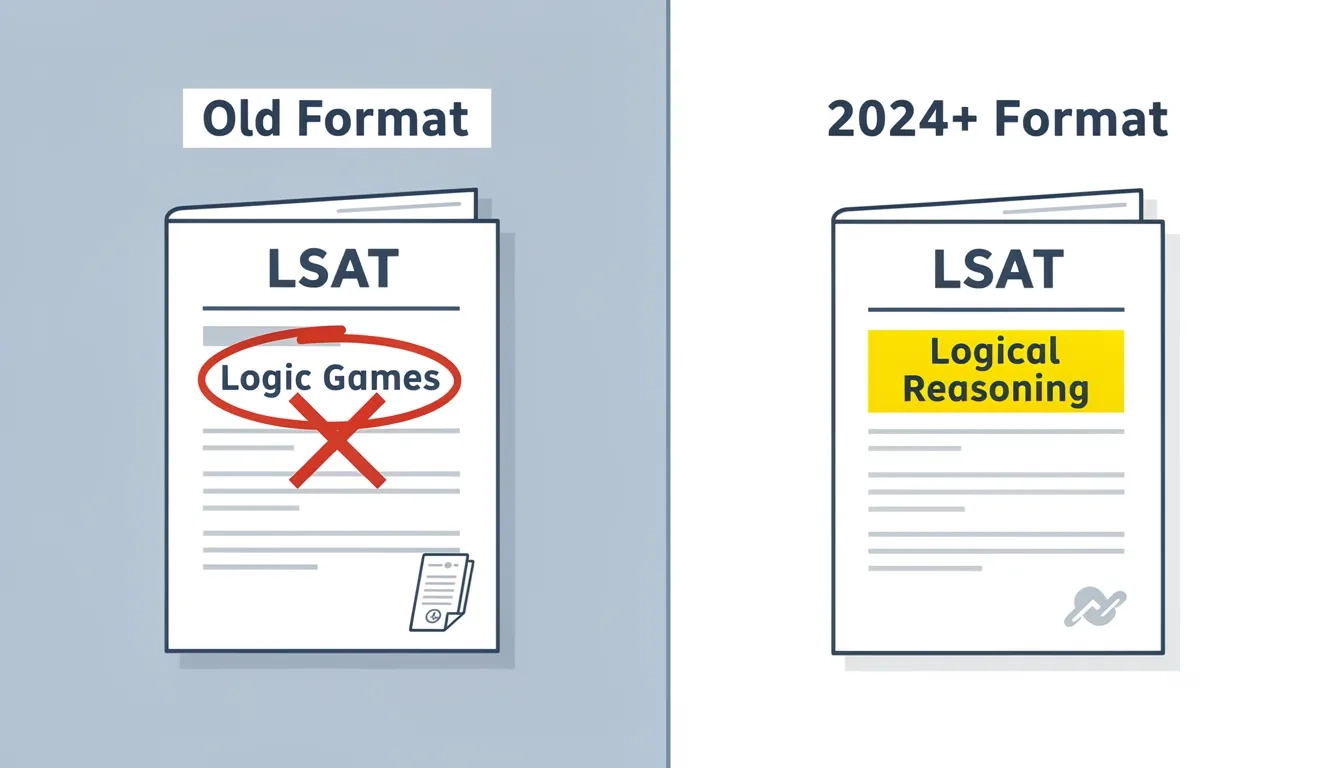
In August 2024, the Law School Admission Council (LSAC) officially retired the Analytical Reasoning section — what everyone called "Logic Games" — and replaced it with a second Logical Reasoning section. The current LSAT has two Logical Reasoning sections and one Reading Comprehension section. That's it.
This matters because Logic Games had been the centerpiece of LSAT prep for over 30 years. PowerScore built a publishing empire around its Logic Games Bible. Courses competed on who could teach setup diagrams fastest. That section no longer exists on the exam.
Most major prep companies updated their curricula by late 2024. But plenty of old Reddit posts and discounted study packages still lead students to spend weeks mastering a section that won't appear on test day. Verify current format coverage before buying anything.
The Top LSAT Prep Courses at a Glance
| Course | Best For | Price | Est. Score Gain |
|---|---|---|---|
| Blueprint | Best overall; live instruction | ~$149/month | ~11 points |
| LSAT Demon | Adaptive daily drilling | ~$99/month | 8–12 points |
| 7Sage | Value + official practice tests | ~$69/month | 8–12 points |
| Princeton Review | Score guarantees; T14 targets | $799–$2,099 | 5–8 points |
| Kaplan | Flexible schedules; live classes | $899+ | 5–8 points |
| PowerScore | Strategy depth; in-person option | $195/month | 6–10 points |
| Magoosh | Tightest budget | $299/year | Varies |
Blueprint: The Current Crowd Favorite
Blueprint earns the top overall rating in most head-to-head comparisons right now, and looking at what's actually in the course, it's not hard to understand why.
The platform is well-designed in ways that matter. Videos are engaging rather than the kind where an instructor reads slides while you check your phone. The adaptive study plan adjusts based on your scoring patterns. The analytics dashboard shows you exactly which question types are sinking your score, so you can target practice rather than grinding every section with equal effort.
Blueprint reports an average 11-point improvement for students who complete the course — higher than most competitors claim. The live online class option adds structured accountability that many self-paced learners genuinely need but won't admit until they're three weeks behind schedule.
The tradeoff is price. Plans start around $149/month, which is more expensive than 7Sage or LSAT Demon. But run the math: if a 5-point improvement increases your scholarship offer by $40,000 at a target school, you're arguing about the wrong cost.
LSAT Demon and 7Sage: Built for Self-Studiers
These two aren't as flashy as Blueprint or as famous as Kaplan. They're quietly the best options for disciplined, self-directed learners.
LSAT Demon, co-founded by Nathan Fox (who scored 179 on the actual LSAT), takes an algorithm-first approach. The platform decides what you practice next based on where you're currently losing points — you don't set your own agenda. This sounds limiting. For Logical Reasoning mastery, it's exactly the right method. Higher-tier plans include daily live classes at around $99/month, making it the best live instruction value on this entire list.
7Sage plays a different game. The platform gives access to all 96 official LSAT PrepTests that LSAC has licensed for third-party use — more official material than any competitor. For the segment of high-scorers who believe drilling real LSAT questions is the most important study activity (and the evidence backs this up), 7Sage at $69/month is hard to argue against.
7Sage's interface isn't as polished as Blueprint. The lesson videos are functional rather than produced. But the analytics are solid, and the community forums are genuinely useful for working through problems where you understand the explanation but still got the question wrong.
One insight that surprises students: some people use LSAT Demon for adaptive drilling and 7Sage for official practice tests at the same time. The combined monthly cost is still less than a single month of Princeton Review.
Princeton Review and Kaplan: The Legacy Options
Both have been around long enough to have taught the parents of today's applicants. Both still have real strengths worth understanding.
Princeton Review's 165+ guarantee is the most aggressive commitment in the industry. Pay $2,099, follow the program, and the company promises a 165 or higher — or you get a full refund plus a free course repeat. For students targeting schools like Northwestern Law or Georgetown where median LSAT scores sit right in that range, this guarantee has concrete financial value.
The course delivers: 230+ hours of instruction, 70+ official practice tests, and instructors who must be both high scorers and trained educators. The live class environment suits students who perform better with external accountability than self-directed study.
Kaplan added a useful Interactive Practice tool in 2025 that walks students through each question type with scaffolded guidance before releasing them to solo practice. It addresses a gap most courses ignore — the transition from "I understand this concept" to "I can execute it correctly under 35-second time pressure."
The honest comparison: at $899 to $2,099, you're paying premium prices for live structure, brand recognition, and guarantee policies. The underlying content isn't demonstrably stronger than Blueprint or LSAT Demon. If you need external accountability and want financial protection baked in, these are your courses. If you're self-directed, there's cheaper.
PowerScore and Magoosh: Strategy Depth and Budget Value
PowerScore built its reputation on the Logic Games Bible, which sold hundreds of thousands of copies across three decades of LSAT prep. With Logic Games gone, the brand is mid-transition — but the Logical Reasoning Bible still holds water as one of the most thorough LSAT strategy texts available.
The on-demand course at $195/month delivers the PowerScore methodology in video form. It suits students who want to understand why answers are correct, not just pattern-match quickly. PowerScore also offers live in-person classes, which is rare among modern LSAT companies and worth noting if you're in a city where that's available.
Magoosh at $299 for a full year is the budget pick that doesn't embarrass itself. You get 7,000+ official LSAT questions, complete video explanations for 10 full practice tests, and a score improvement guarantee. For students who can't commit $1,000+ to prep, this is the sensible option.
The limitation is real: no live instruction, and community support is thin compared to 7Sage's forums. Magoosh alone probably won't take you from 155 to 170. It can absolutely move you from 148 to 158 with disciplined practice.
How to Actually Choose
Stop looking for the objectively best course. There isn't one. Use this framework instead:
- Scoring below 155 and need structure: Blueprint or Princeton Review. Both offer guided paths, live instruction, and systems that prevent the most common failure mode — stopping practice entirely after a bad week.
- Scoring 155–165 and want to break through: LSAT Demon or 7Sage. At this level, targeted drilling on weak question types outperforms broad curriculum review. Both platforms have the analytics to show you exactly where you're bleeding points.
- Already at 165+ and targeting 170+: Add private tutoring (Blueprint, PowerScore, and Kaplan all offer it). One-on-one work on specific problem patterns moves top-end scores more than any platform's content library.
- Budget is your primary constraint: Start with 7Sage's free diagnostic test, then upgrade to their paid plan ($69/month) or Magoosh ($299/year) depending on whether you prefer live drilling or question bank depth.
- Structured learner who needs external pressure: Kaplan or Princeton Review live classes. Self-paced courses work for everyone in theory and far fewer people in practice.
My honest take: Blueprint is the best starting point for most people, and you can always switch to LSAT Demon for drilling if you plateau. The students who overpay are usually the ones who bought Princeton Review hoping the price tag would do the work.
Bottom Line
- Blueprint is the best all-around choice for most students — strong platform, live class options, and a verified 11-point average score gain.
- LSAT Demon and 7Sage offer better value for self-directed learners, especially anyone targeting 165+.
- Princeton Review earns its premium specifically when the score guarantee provides real financial protection — not as a general prestige purchase.
- Whatever you choose, confirm it covers the current format: two Logical Reasoning sections, one Reading Comprehension, no Logic Games.
- The single most important study activity regardless of course: timed drilling on official LSAT questions, followed by systematic review of every mistake.
Frequently Asked Questions
How many hours does it take to prepare for the LSAT?
Most students need 250–300 total hours spread over 3–6 months. Students starting below 150 should budget toward the 6-month end; those already scoring in the mid-160s targeting a top-10 school often need 4 months of focused, targeted work. Passive review barely moves scores — active practice and error analysis do the actual work.
Is the score improvement data from prep companies reliable?
Treat it skeptically. Most companies report averages from students who completed the full course and voluntarily submitted scores, which skews results upward. Blueprint's 11-point average, for instance, excludes dropouts and non-reporters. A more honest signal: read 50+ student reviews on Reddit's r/LSAT, where the full distribution of experiences shows up, not just the success stories.
Can free resources replace a paid course?
Khan Academy's LSAT prep, built in direct partnership with LSAC, is the strongest free option available. It includes official questions, video explanations, and a personalized practice path. It won't replace a full course if you're targeting 170+, but it's a legitimate starting point — and a useful supplement alongside any paid course.
Should I take the LSAT more than once?
Most T14 programs evaluate your highest score, and LSAC allows up to three attempts per testing year. Taking it twice with meaningfully improved prep is common and rarely penalized. Taking it four or five times without changing your preparation approach is the pattern admissions committees actually scrutinize — it signals you've hit a ceiling, not that you're persistent.
What's the real difference between self-paced and live LSAT courses?
Self-paced courses let you study on your schedule, which sounds ideal and leads to abandonment at higher rates than companies publish. Live courses add instructor accountability and scheduled class time — genuinely useful if you know you need external structure to stay consistent. Most platforms now offer hybrid options that split the difference, which is often the right call for working professionals.
Sources
- Best LSAT Prep Courses (Reviewed & Ranked) | Test Prep Insight
- 11 Best LSAT Prep Courses of 2026 | CRUSH The LSAT
- Best LSAT Prep Courses (2026 Expert Review) | Sojourning Scholar
- Best LSAT Prep Courses: Blueprint, Kaplan, 7Sage, LSAT Demon Reviewed
- LSAT Course Comparison: PowerScore vs. The Princeton Review | CRUSH The LSAT