Best Online SAT Tutoring Services for 2026: Ranked and Reviewed
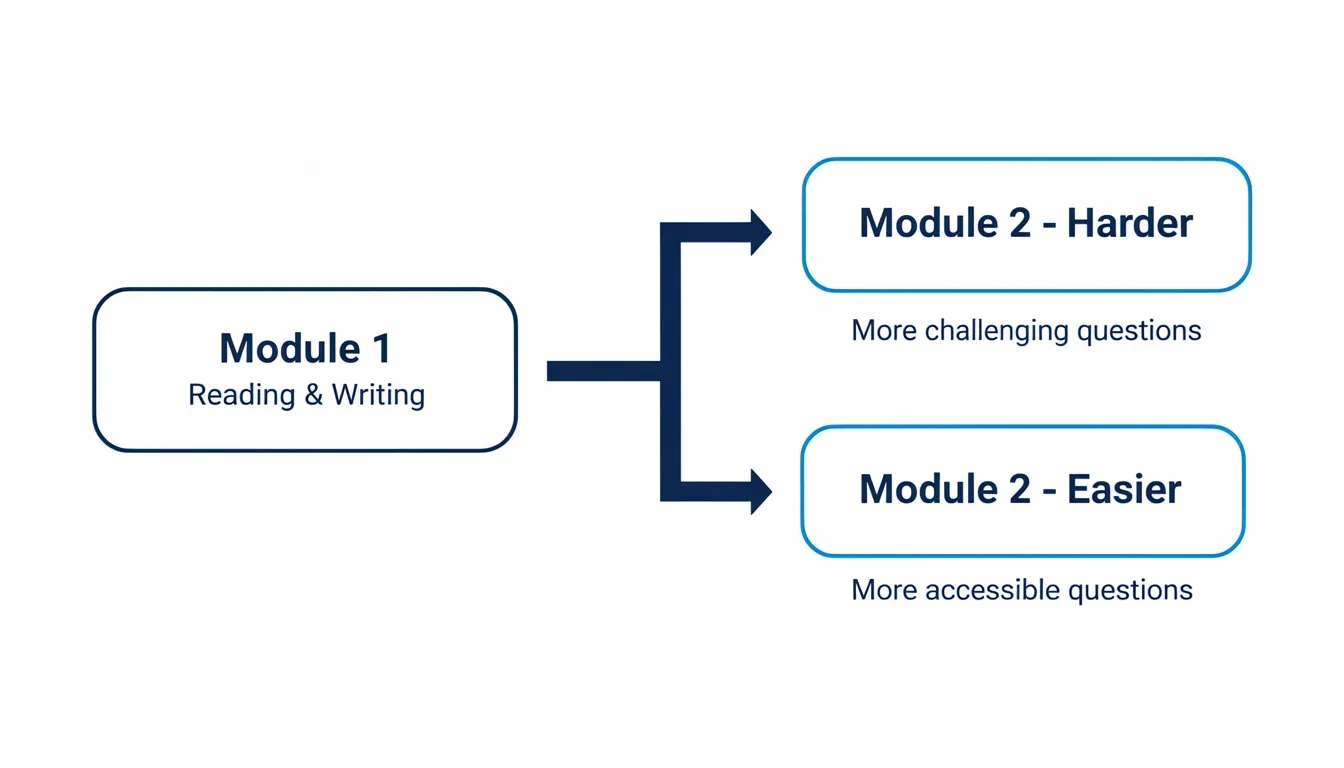
March 2024 was a turning point. The College Board scrapped the paper SAT and moved every US student to a digital, adaptive format: 46 minutes shorter, built on a two-module structure that adjusts difficulty mid-test. The tutoring industry had to scramble. Some services updated their materials fast. Others quietly kept selling prep for a test that no longer exists.
Two years on, the market has largely sorted itself out. But choosing the wrong service still costs families months of prep time and, in some cases, over $5,000 in fees. Here's what actually holds up in 2026.
What the Digital SAT Actually Changed
The test now uses a two-module adaptive structure for each section. Your performance on Reading & Writing Module 1 determines whether Module 2 serves harder or easier questions. That Module 2 difficulty level has an outsized effect on your score ceiling. Students who stumble on Module 1 land in the "low" second module and can realistically cap out around 1,200, regardless of how well they finish the back half.
Module 1 accuracy isn't just one priority among many — it's the ballgame. Old SAT prep treated every question as roughly equal in strategic weight. Solid Digital SAT prep tilts heavily toward Module 1 precision, because a stumble there truncates the entire score potential.
The test also got shorter: 2 hours and 14 minutes versus 3 hours for the paper version. Endurance matters less. Intensity and timing efficiency matter more.
Before hiring anyone, ask directly: "How do you approach Module 1 preparation specifically?" If the answer sounds like generic content coverage, that's a red flag. A tutor who hasn't absorbed the adaptive structure is coaching you for a test that no longer exists.
How to Pick the Right Service
Not every student needs the same thing. Run this four-step check before spending a dollar:
- Take a free practice test first. Khan Academy offers full-length Digital SAT practice built on official College Board materials. Do this before paying for anything. Your starting score shapes every other decision.
- Decide between live tutoring and self-paced. Live tutoring outperforms software for students making consistent conceptual errors — a skilled tutor spots mistake patterns faster than any algorithm. Self-paced works well for disciplined students who mainly need more practice reps.
- Set a realistic budget. A Wiingy study analyzing 3,600 tutors across five platforms (conducted June–August 2025) found SAT tutors average $62 per hour — 63% more than language tutors at $38. A full 20-hour package from a reputable service runs $1,500 to $3,000. Self-paced courses start in the $300–$800 range.
- Check tutor credentials independently. Ask what the tutor scored. "Certified" and "experienced" are not substitutes for actual high performance on this specific test. Top 1% is the bar worth paying for.
The Best Online SAT Tutoring Services for 2026
| Service | Best For | Price Range | Score Guarantee |
|---|---|---|---|
| PrepMaven | Targeting 1400+ with elite tutors | $79–$349/hr | None published |
| Revolution Prep | Accountability + verified credentials | ~$132/hr (12-hr package) | Program-based |
| Kaplan | Brand trust, mid-range budget | $129–$1,999 packages | Money-back |
| PrepScholar | Adaptive tech, self-directed learners | $397–$995 | 160-pt (conditions apply) |
| Varsity Tutors | Flexible scheduling, manageable rates | $70–$95/hr | Rematch only |
| Wyzant | Budget, DIY tutor selection | $20–$200/hr | Good Fit (1st session) |
| Magoosh | Affordable self-paced prep | $130–$400 | Score improvement |
| Khan Academy | Free, official practice materials | Free | N/A |
PrepMaven
Tutors are largely Princeton graduates who scored in the top 1% on standardized tests — and PrepMaven publishes its vetting criteria openly, which most competitors quietly avoid. Rates run $79 to $349 per hour depending on tutor tier, and the company reports typical student improvements of 100–300 points.
No formal score guarantee. You're paying for quality and betting on it. For students targeting 1400+, that bet has historically paid off. My honest take: PrepMaven offers the best risk-adjusted value at the premium tier.
Revolution Prep
Revolution Prep accepts fewer than 3% of tutor applicants. That selectivity shows up in quality consistency across the board. Their 12-hour private tutoring package runs around $1,579 (roughly $132 per hour), which lands between budget and premium. One standout feature: sessions are recorded, so students can rewatch tutor explanations in the days before their exam.
The catch is the team model. Revolution Prep pairs students with both an academic advisor and a primary tutor. Some families love the structure. Others find it feels like too many people involved in something that should be one-on-one.
Kaplan
Kaplan has been in test prep since 1938, and that institutional history shows in the depth of their materials. Packages run $129 for self-study up to $1,999 for full private tutoring access. Their money-back guarantee is cleaner than most competitors: if your score doesn't improve, you get a refund. The conditions are less layered than Princeton Review's equivalent offer.
The tradeoff is adaptability. Larger organizations move slower, and some users report that Kaplan's Digital SAT content still feels like it's catching up to smaller, more agile competitors.
PrepScholar
PrepScholar's adaptive platform tracks performance question by question and adjusts what you study next — a philosophy that mirrors the Digital SAT's own structure, which is probably intentional. Good fit for students who want structured self-paced prep with built-in accountability.
Their 160-point improvement guarantee has strict limits: start below 1,370, complete every lesson, take all practice tests. If you begin at 1,350, you can qualify. Start at 1,400 and the guarantee simply doesn't apply to you. Worth knowing before you sign up.
Wyzant
Wyzant is a marketplace (not a tutoring company), with over 80,000 tutors listing profiles at rates from $20 to over $200 per hour. The Good Fit Guarantee refunds your first session if the match doesn't work out.
Quality variance is the issue. Some Wyzant tutors are genuinely exceptional. Others have mediocre credentials and padded testimonials (which tend toward 4.8 stars for basically everyone on the platform, making ratings nearly useless as a filter). If you go this route, ask any candidate directly about their test scores and what their specific approach to Module 1 prep looks like. Don't skip the vetting step.
What SAT Tutoring Actually Costs in 2026
Here's how spending typically maps to outcomes:
- $0: Khan Academy only. Works for self-motivated students within 100–200 points of their goal.
- $300–$800: Self-paced courses (Magoosh, Kaplan self-study, PrepScholar base plan). Best for content review and additional practice volume.
- $1,500–$3,500: 15–25 hours with a quality live tutor. The sweet spot for most students with a 50–150 point improvement target.
- $4,000–$8,000+: Premium packages with vetted elite tutors. Makes financial sense for students targeting 1450+ where marginal score gains affect outcomes at highly selective schools.
Online tutoring consistently runs 10–25% cheaper than in-person sessions with comparable tutor credentials. Unless a student works dramatically better face-to-face, there's no strong reason to pay the in-person premium.
Score Guarantees: The Fine Print Nobody Reads
Score guarantees appear on almost every tutoring company's homepage. They're good marketing. As actual financial protection, most of them are thinner than they look.
PrepScholar's 160-point improvement guarantee is the best known. The eligibility conditions are strict: start below 1,370, complete every lesson, take every practice test, attend every session. Miss one requirement and you're out. Students starting around 1,200 who stay consistent can qualify. Students starting at 1,350 almost certainly cannot.
Princeton Review's offer follows similar logic, with enough conditions that payouts are rare. Kaplan's refund policy is the exception — relatively straightforward, applies broadly, and doesn't require threading a maze of eligibility rules.
The honest way to think about guarantees: they signal company confidence, but they aren't insurance policies. Several of the best-performing tutoring programs don't publish guarantees at all, because their reputation does the selling.
Getting the Most Out of Tutoring Sessions
Hiring a tutor is the start, not the finish. A few things that actually move scores:
- Practice tests matter more than lesson hours. Students who take five or more full-length Digital SAT practice tests before test day outperform those who only drill problem sets. Managing the cognitive load of a 2+ hour session is its own skill — one that only develops through repetition.
- Review wrong answers before each session, not during. Most students skip this. Tutors who build in dedicated error pattern analysis time are worth more per hour than tutors who just assign new problem sets.
- Start 3–4 months out. A good tutor hired four weeks before the exam can refine technique. Structural knowledge gaps take longer to close than that.
- Use Khan Academy between paid sessions. Even families paying $200/hour for PrepMaven tutoring use Khan Academy for additional practice volume. The free materials are genuinely good for drilling content, even if they don't teach test-taking strategy.
Bottom Line
- Start with Khan Academy's free diagnostic before committing to any paid service. Your baseline score shapes every other decision.
- Match the service to your goal: students below 1,200 need content work first; students at 1,300+ need strategy coaching and adaptive practice that mirrors the test structure.
- For elite-tier tutoring, PrepMaven offers the best value at the premium end. Revolution Prep is the strongest choice for consistency and accountability. Kaplan has the cleanest score guarantee.
- Score guarantees with sub-1,370 eligibility requirements protect the students who least need premium tutoring. Read what you actually qualify for before counting on one.
- The most common mistake isn't picking the wrong service — it's hiring someone three weeks before the test. Meaningful score improvement needs time to stick.
Frequently Asked Questions
How many hours of SAT tutoring do most students actually need?
Most students working toward a 100–150 point improvement need 15–25 hours of direct tutoring, supplemented by independent practice. Students targeting 1,450+ from a starting score below 1,300 often need 30 or more hours. Spacing matters as much as volume — 20 hours spread over 10 weeks produces better retention than 20 hours crammed into three weeks before the test.
Is Khan Academy actually good enough on its own, or is that a myth?
For self-motivated students, yes — up to a point. Khan Academy's materials are built with the College Board, which makes them the most accurate free resources available for the Digital SAT format. The gap is strategy: the platform won't teach you to manage Module 1 pressure, triage hard questions, or recover from a mid-test stumble. Students targeting 1,400+ should supplement with at least some live coaching that specifically addresses the adaptive structure.
Do score guarantees ever actually pay out?
Rarely, because the eligibility conditions are designed to qualify very few students. PrepScholar's 160-point guarantee applies only to students starting below 1,370 who complete every required component. Princeton Review's policy includes conditions most families don't discover until they file a claim. Kaplan's money-back guarantee is the most straightforward of the major providers. Treat guarantees as a signal of confidence, not a financial safety net.
What's the right grade to start SAT tutoring?
Most students benefit from starting serious prep in spring of 11th grade, which allows one or two test attempts in fall and spring of senior year with time to improve between sittings. Starting in 10th grade makes sense for students targeting highly selective schools, but most students who begin before then aren't developmentally ready to retain the material at pace. The summer before junior year is the sweet spot for most families.
What's the real difference between SAT prep courses and SAT tutoring?
A prep course delivers structured content at a fixed price — you move at the program's pace, not yours. Tutoring is individualized: a person identifies your specific gaps and adjusts in real time. Courses are more cost-efficient per hour. Tutoring is more efficient per point gained, if your weaknesses are specific and diagnosable. Many families combine both: a course for baseline content review, then targeted tutoring for skill gaps that the course didn't close.
How do I verify a tutor's credentials before hiring?
Ask directly: what did you score on the SAT? What percentile? Then ask the tutor to walk you through one practice problem before you commit. Strong tutors can explain not just the right answer but the exact reasoning process and where student errors typically come from. Be skeptical of anyone who deflects credential questions or argues that years of teaching experience matter more than their actual test performance on this specific exam.