How to Get Through a Boring Required Course Without Losing Your Mind
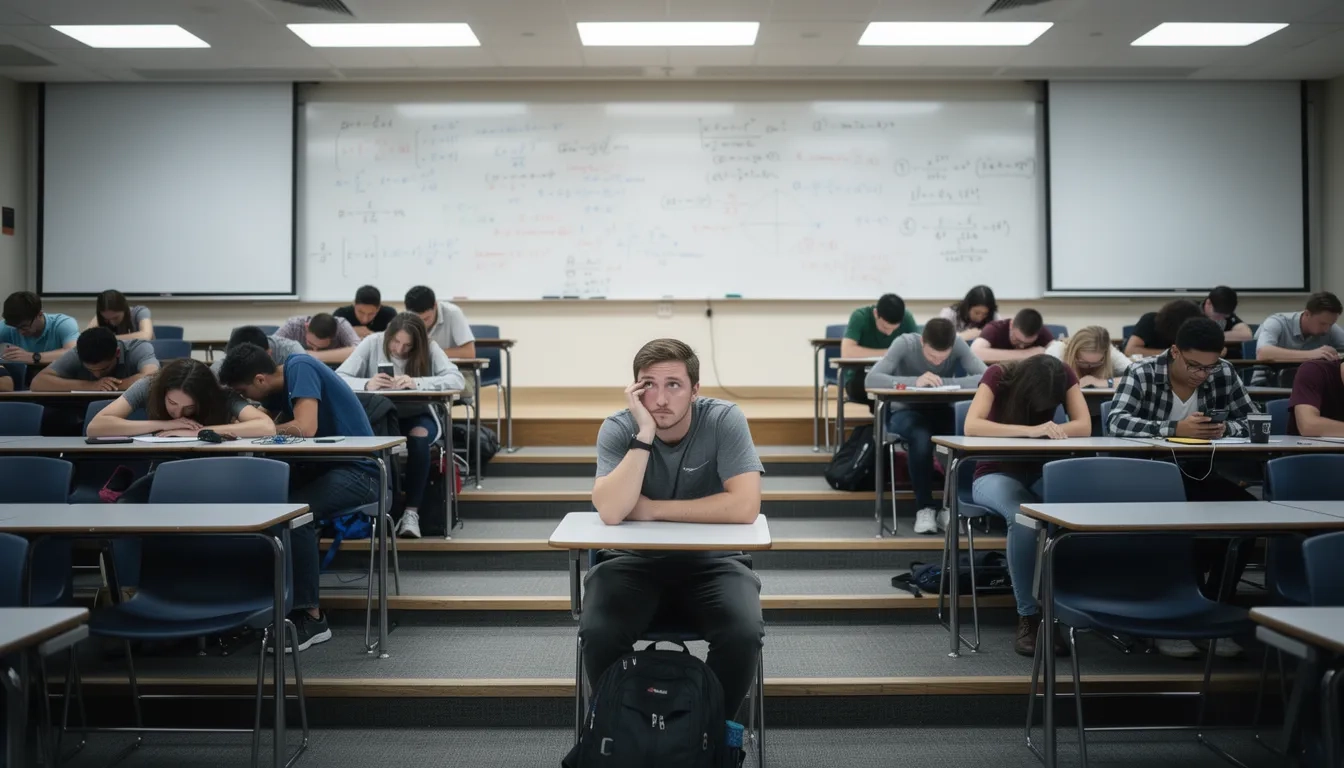
"Intro to Something You'll Never Use." Every degree has at least one of these. You're staring at the syllabus for Statistics for Social Sciences or Western Civilization 1400–1800, running a quiet calculation: sixteen weeks, two midterms, one cumulative final, and approximately zero interest from you. This feeling — mandatory-course dread — is almost universal among students, but very few have an actual strategy for handling it. That's the gap this article is trying to close.
Why Required Courses Feel So Heavy
There's a concrete psychological reason these classes hit harder than electives you chose yourself. Self-determination theory, developed by researchers Edward Deci and Richard Ryan over several decades, identifies three core psychological needs that drive motivation: autonomy (choosing what you do), competence (feeling capable at it), and relatedness (feeling connected to others in the work).
Required courses remove the first one before the semester even starts. You didn't choose this. Your degree audit did.
A 2024 meta-analysis published on selfdeterminationtheory.org examined 36 SDT-based interventions across 11,792 students and found that supporting learner autonomy produced the single largest effect on academic engagement of any motivational strategy tested. Mandate a course, and you've cut off that lever entirely.
But the other two needs — competence and relatedness — remain available. You can build them on purpose. That's where the real strategy begins.
The Reframe That Changes Your Starting Position
The most effective thing you can do before week one is connect the course to something you already care about. This sounds almost insultingly obvious. Most students skip it anyway.
Carnegie Mellon's Eberly Center for Teaching Excellence, which studies student motivation across hundreds of courses, identifies value-finding as one of the most reliable strategies for sustaining effort. The mechanism is expectancy-value theory: how hard you try scales with how much you think the outcome is worth to you personally.
My honest take: most students who complain endlessly about a boring required course never actually spent five minutes trying to find a connection point. Try this — write one sentence that genuinely answers how this course connects to something you want. Maybe Intro Accounting teaches you to read a financial report without being fooled. Maybe Western Civ gives you context for geopolitical news you follow anyway. The connection doesn't need to be transformative. It just needs to be real.
What to Do Before the First Class (47 Minutes of Work)
Most students arrive on day one already defeated. Front-loading a small amount of prep work shifts your default from passive dread to mild curiosity, which is all you need to start from a better position.
Here's the sequence:
- Read the entire syllabus. Map every exam, assignment, and point value. Know where your grade actually lives before you've sat through a single lecture.
- Look up the professor's teaching style on RateMyProfessors or course reviews. Not to judge — but knowing whether they test on lecture specifics vs. textbook concepts changes how you take notes from day one.
- Watch one short video on the subject. A 2020 study published in PMC found that brief video exposure to a low-interest topic measurably increased participants' motivation to learn more about it, even when the video wasn't perfectly on-topic. Ten minutes of a well-made explainer primes your brain to treat the material as interesting rather than alien.
- Identify one person to sit near. Not your closest friend (too distracting), but someone who seems engaged. Relatedness, that third motivational need, often activates through simple proximity to people who show genuine interest in the work.
The whole sequence takes about 47 minutes. It's not glamorous prep, but it pays off over sixteen weeks.
Staying Functional During the Actual Lectures
Sitting through a lecture on material you didn't choose is a learnable skill, not a personality trait. Most students try to power through on willpower alone. That stops working around week four.
The body-follows-mind effect is more reliable than discipline. Lean forward slightly. Open your notebook and write in it. Make occasional eye contact with the professor. Research on embodied cognition shows that adopting alert, engaged postures shifts mental state in that direction. Going through the physical motions of interest tends to recruit real attention over time.
Note-taking strategy matters just as much as posture. Don't transcribe. Translate in real time: when the professor says "the Treaty of Westphalia established the concept of state sovereignty," write "T of W (1648) = countries agreed not to meddle in each other's internal affairs — first modern international system." Forcing that translation keeps your brain from going passive, and paraphrasing creates memory anchors that verbatim transcription doesn't.
"Knowledge acquisition may drive feelings of curiosity and interest because it helps people identify gaps in their understanding, which they then seek to fill." — 2020 PMC research on information exposure and student motivation
On seating: the front two rows don't magically make you care about the French Revolution, but they reduce smartphone temptation and create mild social accountability. You're more visible to yourself, mostly. That mild pressure is genuinely useful when motivation is low.
A few things that reliably help with staying awake: cold water over coffee (caffeine tolerance erodes fast by week three), actually sleeping before class, and keeping a notepad for light doodling when your mind needs a low-level fidget outlet. Research suggests doodling can improve information retention compared to forcing passive attention — your brain needs somewhere to put the extra energy.
How to Study Material You Actually Dislike
Outside the classroom is where most students lose the war with a boring required course. Lectures have social pressure keeping you somewhat present. Studying alone with dry material is a different problem entirely.
Re-presentation is the most underused study technique for low-interest courses. Take the textbook content and actively reformat it: write it as if explaining to a smart high schooler, build a mock quiz for a classmate, or sketch a concept map instead of rereading the same highlighted pages. The act of converting material into a different form forces real comprehension. Facts in isolation are forgettable. Facts you've restructured into your own framework stick.
Study approach depends heavily on what kind of boring course you're dealing with:
| Approach | Best for | Watch out for |
|---|---|---|
| Re-presentation (reformat in your own words) | Dense factual content, history, science surveys | Takes longer upfront — worth it |
| Practice problems before reading theory | Math, stats, logic-based courses | Frustrating without any context at all |
| Study group with one motivated person | Discussion or reading-heavy courses | All-bored groups reinforce disengagement |
| Spaced repetition (Anki, etc.) | High-volume memorization, vocab, definitions | Doesn't build conceptual understanding on its own |
For session length: 30-35 minutes of real focus followed by a genuine 10-minute break consistently beats 90 minutes of half-attention. This matters more for material you find dull — the passive "reading check" where your eyes scan the page while your mind goes elsewhere is the path of least resistance, and it's also nearly useless for retention.
Running the Grade Math Honestly
There's a legitimate version of strategic grade management that every student should know. Calculate exactly what you need before the semester gets underway, then work backward.
If the final exam is worth 40% of the grade and you're sitting at a 79% heading into the last two weeks, you can calculate the exact score you need on the final (it's probably lower than your anxiety is telling you). Running the actual numbers, with a spreadsheet if needed, removes ambient dread that makes these courses feel worse than they are.
Most gen-ed courses bury 20-35% of their total points in low-stakes consistent work: participation, weekly reading responses, attendance, in-class activities. Students who dismiss these small tasks and then over-study for the big exam routinely end up with lower final grades than students who banked the easy points all semester. Get the low-effort points first. They're reliable and most students leave them on the table.
One more move worth making: go to office hours once. Ask one genuine question about the material. It creates a face-to-face relationship that can matter at the end of the semester when grades are borderline and the professor has discretion. This isn't manipulation — it's exactly what office hours are designed for.
The Unexpected Thread Worth Pulling
Required courses are taught at survey level because they serve dozens of majors simultaneously. That breadth makes them feel thin. But underneath most survey courses is at least one genuinely interesting thread if you're willing to look for it.
The economics requirement you're dreading might have three lectures on behavioral economics that explain why people make predictably bad decisions under pressure. The biology gen-ed might include one unit on evolutionary psychology that suddenly clarifies social dynamics you've observed for years. Required courses are sampler menus. Most of the dishes are unremarkable. One or two might actually surprise you.
Give yourself permission to follow one of those threads outside the syllabus, even briefly. The PMC curiosity research found a reliable feedback loop: exposure to a small amount of information increases desire to learn more, even for topics initially rated as uninteresting. The hard part is getting the first spark. After that, the curiosity tends to carry itself a little.
And if none of it works? If the course is genuinely unredeemable from week one to finals week? You do the work needed to protect your GPA, remind yourself that sixteen weeks is not a life sentence, and move on without guilt. That's not giving up. That's knowing where to put your energy.
Bottom Line
Boring required courses are a nearly universal feature of degree programs, not a flaw someone forgot to fix. The students who handle them well usually make a few concrete decisions early:
- Before the semester: Spend 47 minutes reading the syllabus end to end, looking up the professor's style, watching one short video on the topic, and writing one sentence connecting the course to something real in your life.
- During lectures: Use physical posture to drive mental engagement. Translate what you hear into your own words in real time instead of transcribing. Sit somewhere that creates mild accountability.
- When studying alone: Re-present the material in a different format instead of rereading highlighted text. Run your grade math so you know what you actually need, not what your anxiety is guessing.
- Throughout the semester: Bank the low-stakes consistent points first. Visit office hours once. Look for the one subtopic that catches your attention, even briefly.
Motivation is a response to conditions, not a fixed character trait. You can improve the conditions.
Frequently Asked Questions
Is it okay to just do the bare minimum in a required course?
Yes, with one condition: make sure "bare minimum" actually protects your GPA. A lot of students underestimate what the minimum is, skip the low-stakes work, then find themselves needing an unrealistic exam score at the end. Know your grade math before you coast, and make sure the easy points are already banked.
Can I realistically make myself care about something I have zero interest in?
Genuine interest is hard to manufacture on command. But engagement is more buildable than most people expect. The 2020 PMC study on information exposure found that even brief contact with a low-interest topic measurably increased participants' motivation to learn more about it. You don't need to love the subject. You just need to find one corner of it that doesn't bore you — and let curiosity do the rest.
Does sitting in the front of class actually help, or is that just advice from overachievers?
It helps more than skeptics expect, but not for mysterious reasons. Front-row seating reduces the social pull of your phone, makes side conversations awkward, and creates mild visibility pressure. Those three things together tend to improve focus even when motivation is low. It's not a personality statement. It's an environmental nudge.
Myth: Required courses are always useless filler. Is that true?
Not really. Gen-ed requirements are often poorly taught at the survey level, which creates legitimate boredom — that part is fair criticism. But the underlying subject matter is usually not useless. Most students who later encounter statistics, economics, or basic logic in real professional contexts wish they'd paid more attention in the intro class they resented. The content had value; the delivery often didn't.
What should I do if the professor is genuinely bad at teaching?
Lean harder on the textbook and outside resources. A poor instructor is not a reason to disengage — it's a reason to change your learning strategy. Platforms like MIT OpenCourseWare and Khan Academy cover most standard gen-ed material clearly, often better than the lecture you're sitting through. Treat the classroom as attendance points and the online resources as the actual instruction.
How do I stop falling asleep in a boring lecture?
Sleep before class matters more than any in-class trick. Beyond that: cold water, front-row seating, and active note-taking (translating rather than transcribing) are the three levers that help most. If you're fighting genuine fatigue, a 20-minute nap before a morning lecture consistently outperforms three cups of coffee in terms of sustained focus.
Sources
- Carnegie Mellon Eberly Center: Strategies for Lack of Motivation
- PMC: Exposure to information increases motivation to learn more
- Frontiers in Psychology: Self-determination theory and student learning engagement (2025)
- Self-Determination Theory: Meta-analysis of SDT-based interventions in education (2024)
- Smart Student Secrets: How to Survive a Boring Lecture