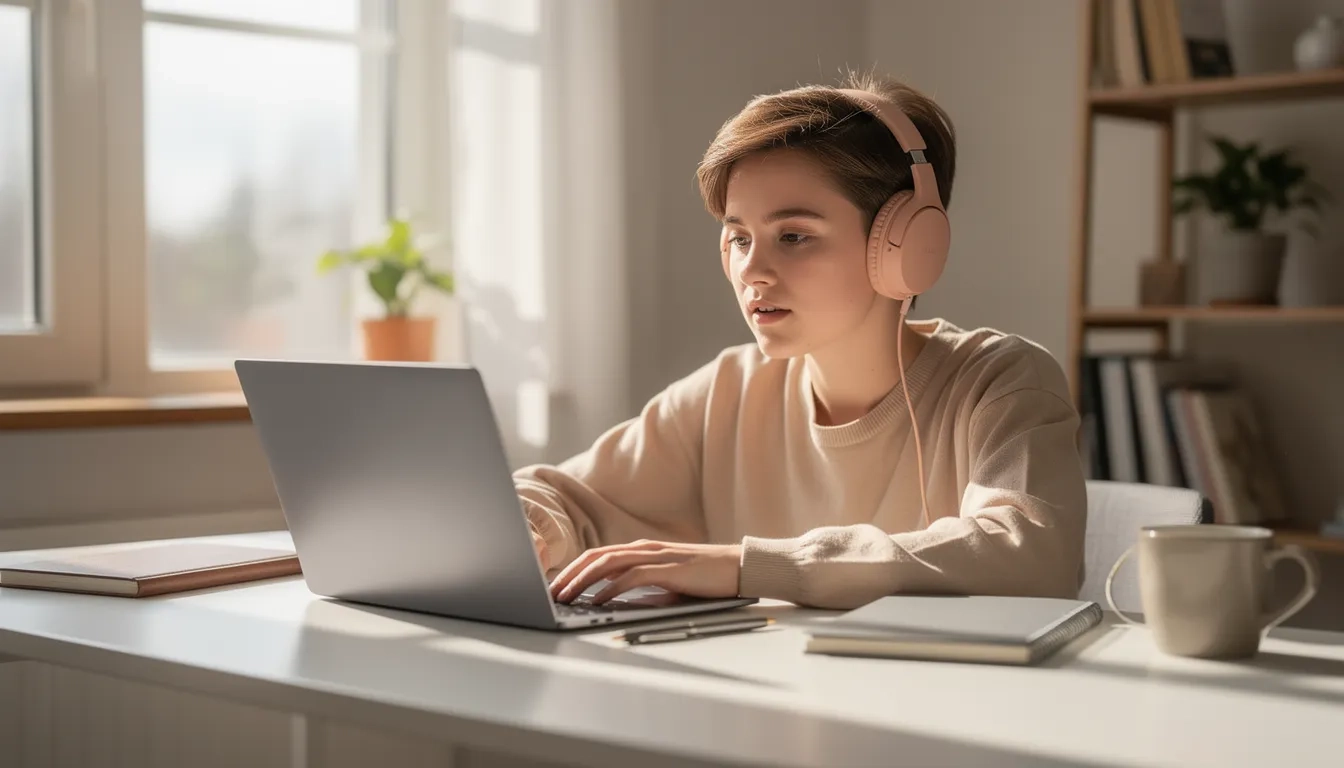
How to Study Effectively in a Noisy Environment
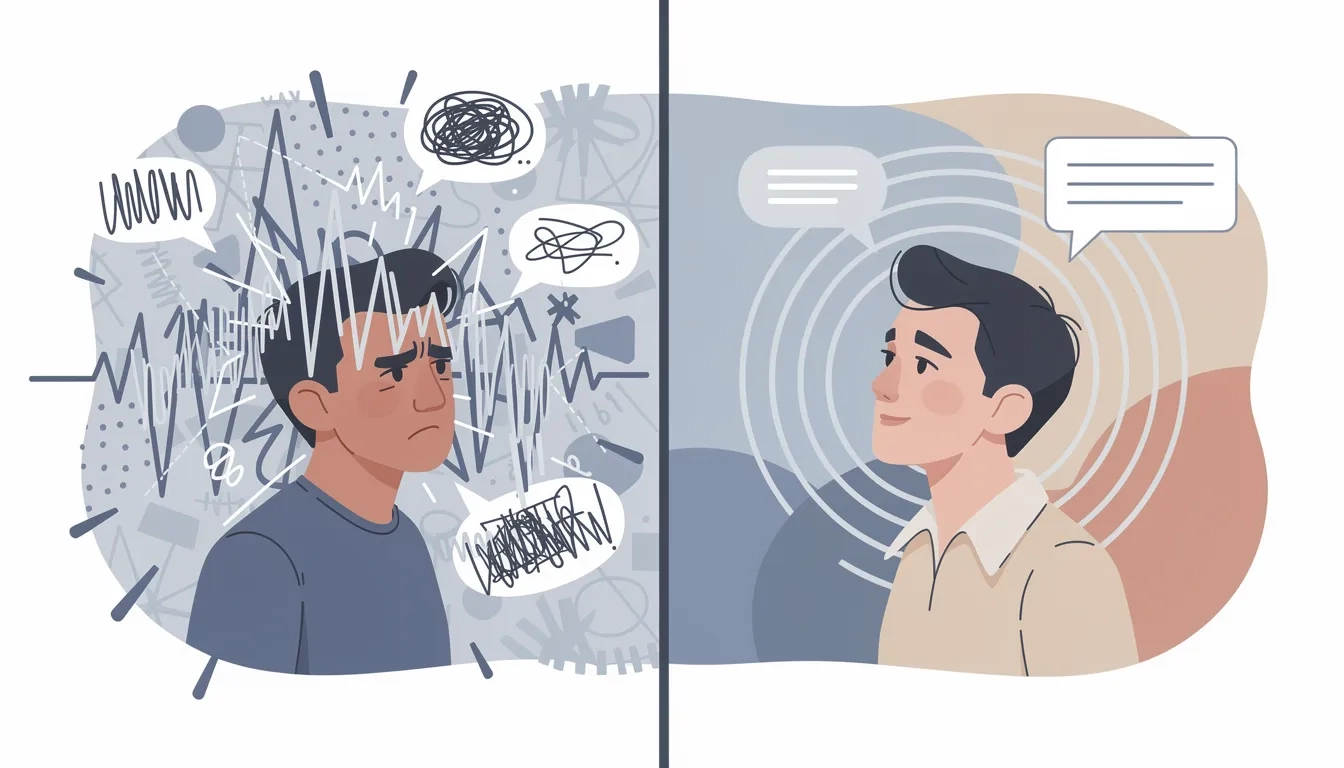
The library is often the worst place to study. Not because it's loud — it's not — but because a single whispered conversation a few rows away can wreck your reading comprehension more thoroughly than a lawn mower running outside. That sounds backwards, but it's what a 2021 study published in Frontiers in Built Environment found when researchers placed 70 university students into simulated open-plan study spaces under different acoustic conditions. Intelligible speech specifically impaired logical reasoning performance. Steady environmental noise barely moved the needle. Noise type matters more than noise volume, and that changes everything about how you approach this problem.
Why Certain Sounds Wreck Your Focus (And Others Don't)
Auditory distraction is not random. The cognitive science here is precise enough to guide real decisions.
Researchers explain distraction through what they call the duplex-mechanism account — two distinct pathways through which sound derails thinking. The first is interference-by-process. Reading requires semantic processing. Understanding speech also requires semantic processing. Run both simultaneously and they compete for the same mental bandwidth. A conversation two tables over torpedoes your comprehension in a way that construction noise outside doesn't, because construction noise never activates your language centers.
The second pathway is attentional capture. Unexpected sounds yank your focus involuntarily. A car alarm. Someone dropping a glass. Your brain evolved to treat acoustic novelty as potentially important, and it interrupts whatever you're doing to investigate. Variable, unpredictable noise — notification pings, intermittent voices, a neighbor's TV switching channels — is disproportionately disruptive relative to its actual volume.
This is the core insight: steady, predictable noise is far less damaging than variable, intelligible speech. That single distinction does more practical work than a dozen tips about "finding a quiet space."
The less obvious point: silence is fragile. One intrusion in a perfectly quiet room hits hard because there's no ambient baseline to absorb it. A consistent background layer actually cushions the impact of individual sounds. This is the mechanic behind why cafés can sometimes feel more workable than libraries — the ambient hum provides a buffer that isolated silence never can.
The Noise Hierarchy: Which Sounds Are Actually Dangerous
Not all background sound damages your focus at the same rate. Here's how different types rank specifically for reading and comprehension work:
| Noise Type | Disruption Level | Why It Hurts |
|---|---|---|
| Intelligible nearby speech | Very High | Activates the same semantic processing you need for reading |
| Irregular alerts and pings | High | Triggers involuntary attentional capture each time |
| Music with lyrics | Medium-High | Lyrics compete with language centers required for reading |
| Instrumental or ambient music | Low-Medium | Predictable; doesn't engage semantic processing |
| Steady traffic or HVAC hum | Low | Consistent baseline; brain habituates within minutes |
| Pink or brown noise | Very Low | Smooth frequency profile that masks sharper sounds |
The practical takeaway: if you're stuck near an ongoing conversation, that's a bigger problem than a loud but steady noise source nearby. Tackle noise type before you tackle noise volume.
Sound vs. Sound: Using Noise to Fight Noise
The most counterintuitive strategy for noisy environments is introducing more sound deliberately. But the research on this is specific enough to be genuinely actionable.
A 2022 study published in Scientific Reports tested three white noise conditions on neurotypical young adults. At 45 decibels (roughly the volume inside a quiet residential library), sustained attention accuracy jumped from 51% to 65%, and creative task performance improved with no measurable increase in stress. At 65 decibels (closer to normal conversation volume), working memory scores nudged up slightly — but typing error rates climbed. Louder is not better. For most reading and learning tasks, the sweet spot sits between 40 and 55 dB.
The right background noise doesn't block your thinking. It insulates it from sharper intrusions while leaving your attention where you put it.
Pink and brown noise tend to outperform white noise for extended study sessions. White noise distributes energy equally across all frequencies and sounds like TV static — some people find it fatiguing after 30 minutes. Pink noise has more low-frequency energy, producing a softer sound similar to steady rainfall. Brown noise goes deeper still, like a distant waterfall or strong wind. For anything longer than a single Pomodoro session, pink or brown noise causes noticeably less ear fatigue.
One important caveat: a 2024 meta-analysis in the Journal of the American Academy of Child & Adolescent Psychiatry reviewed 13 studies covering 335 participants. For people with ADHD or elevated attention difficulties, white and pink noise produced a small but statistically real improvement in cognitive task performance. For neurotypical learners, the same sounds at louder volumes made performance worse. If you try ambient noise and it doesn't help, that's not a failure of willpower — it's information about how your attention system is wired.
For free access to calibrated ambient sound, myNoise.net lets you layer multiple sound sources and dial in precise volumes. A Soft Murmur offers similar control. Both run in-browser without a subscription.
Gear: What Actually Helps
Noise-cancelling headphones are probably the single most useful piece of study gear for loud environments — but only if you understand what they're actually doing.
Active noise cancellation (ANC) uses microphones in the ear cups to sample incoming sound, then generates inverse waveforms to cancel it. This works beautifully on steady, low-frequency noise: café background hum, HVAC systems, the rumble of a train. It works much less well on sharp high-frequency sounds or speech that's close and loud. ANC is a low-frequency filter, not a silence machine.
Passive isolation — the physical blocking of sound by dense foam or a well-sealing ear cup — handles higher frequencies. The best practical setup: ANC headphones with a good seal, playing low-volume pink or brown noise through them. The ANC kills the low-end drone, the physical ear cups muffle the highs, and the ambient sound masks whatever leaks through.
If headphones aren't practical, foam earplugs are underestimated. A standard 3M foam earplug carries a Noise Reduction Rating of 29–33 dB. In a 70 dB café, that pulls the effective noise level down to somewhere around 37–40 dB — a much more workable baseline. Not elegant, but hard to beat on performance per dollar.
Acoustic filter earplugs (brands like Loop, Flare, and Earos) work differently. Instead of blocking all sound, they reduce volume uniformly across frequencies, so you still hear your environment but at a lower level. These suit spaces where you want partial situational awareness — a co-working space, a university common room, anywhere you can't fully check out of your surroundings.
Study Techniques That Reduce Noise Vulnerability
Gear helps, but your study method determines how exposed you are to distraction in the first place.
Active recall is more noise-resistant than passive reading for a specific reason: it demands more working memory. When you close your notes and force yourself to retrieve information, your brain is occupied with the retrieval attempt and has less spare capacity for ambient speech to hijack. Passive re-reading, by contrast, is cognitively cheap — just enough mental activity to feel productive, but not enough to crowd out distraction.
This connects to something worth knowing from the Frontiers study: students' perceived disturbance from background noise was consistently worse than their actual performance decline. The noise felt more disruptive than it was. Anxiety about being distracted compounds the distraction itself — which is the real elephant in the room when people say they "can't study anywhere noisy."
A few approaches that reduce vulnerability regardless of environment:
- Pomodoro sprints (25 minutes work, 5 minutes rest): the defined endpoint makes it easier to hold focus during the sprint. Knowing you only need 14 more minutes until a break is genuinely useful when the table next to you erupts into a loud conversation.
- Written annotations while reading: forcing yourself to respond to material on paper builds an interactive loop that keeps you engaged and leaves less cognitive spare capacity for ambient noise to fill.
- Task-matching to noise context: flashcard review and re-reading tolerate noisy windows. First-exposure learning of genuinely difficult material deserves the quietest window you can find.
My honest take: if you're learning something new and complex — material that needs to click in one sitting — fighting loud noise with techniques and headphones isn't worth the effort. Find 30 genuinely quiet minutes. That half-hour almost certainly beats two hours of compensating in a noisy space.
When and Where You Sit Makes a Real Difference
Environment selection is a lever most people leave on the table.
In a café, corner seats with your back to a wall meaningfully reduce auditory exposure. You eliminate speech coming from behind you and reduce peripheral movement that triggers attentional capture. The difference between a central café table and a corner wall seat isn't just psychological — it roughly halves the number of nearby speakers within your dominant auditory field.
Timing often beats location. Libraries and college coffee shops peak between 11 AM and 2 PM, and again in the early evening. Going at 8 AM or after 8:30 PM can give you the same physical space at a fraction of the ambient noise, with no gear required.
At home, the usual advice is to "find a quiet room," but the more practical move is scheduling. Map your household's noise patterns and protect your hardest study tasks with known quiet windows. Use loud hours for review, admin, and anything that tolerates interruption gracefully.
And the last thing noise discussions almost never mention: your phone is unpredictable noise waiting to happen, even when it's silent. Researchers at the McCombs School of Business at the University of Texas at Austin ran experiments with nearly 800 smartphone users and found that participants whose phones were in another room scored 11.2% better on cognitive tests than those with phones on their desks — even when the desk phones were silenced and face-down. Your brain allocates attention to monitoring the phone whether you ask it to or not. Put it in another room. That single move may do more for your focus than any piece of audio gear.
Bottom Line
- Match your defense to the noise type, not just the volume. Nearby speech demands masking or ANC headphones. Steady environmental noise is far more manageable and often needs no intervention at all.
- Use ambient sound between 40 and 55 dB if you add it deliberately. Louder is counterproductive for most reading and comprehension tasks — the 2022 Scientific Reports data makes this clear.
- Switch from passive re-reading to active recall. Harder retrieval tasks are naturally more noise-resistant because they leave less spare cognitive capacity for distraction.
- Sit in corners, go at off-peak times, and put your phone in another room. These cost nothing and have measurable impact.
- For genuinely difficult new material, protect the environment first. No technique or gadget substitutes for an actual quiet window.
Frequently Asked Questions
Does listening to music with lyrics help you study?
For most people, no — especially during reading and writing tasks. Lyrics activate the same language-processing centers you need to comprehend text, which creates direct competition. Instrumental music, ambient soundscapes, or lyric-free lo-fi tracks are far less disruptive. If you find lyric-heavy music helpful, you're likely using it more as emotional motivation to sit down and start, which is a different (and legitimate) function.
Is complete silence always the best environment for studying?
Not necessarily. Silence is fragile — a single unexpected sound in a quiet room hits harder than the same sound in a space with ambient noise. For many people, a consistent low-level background (40–50 dB pink or brown noise) is more stable and sustainable than aiming for total silence, which is hard to guarantee and easy to shatter.
Why does nearby conversation bother me so much more than other background sounds?
Because your brain processes it through the same semantic channels you need for reading. It's called interference-by-process: the cognitive overlap between understanding speech and processing written language means both compete for the same mental resources. A jackhammer outside doesn't trigger that conflict. The conversation at the next table does.
What if I have ADHD — does background noise work differently for me?
Yes. A 2024 meta-analysis found that white and pink noise produced a meaningful improvement in task performance for people with ADHD or elevated attention difficulties, while the same sounds at louder volumes hurt performance in neurotypical learners. If standard advice about keeping noise low doesn't feel right for you, experimenting with slightly higher ambient volumes (50–65 dB) may be worth trying before dismissing the approach entirely.
How do I handle a home environment where I have no control over the noise?
Two moves that consistently help: first, map the noise pattern and schedule your hardest tasks around it rather than fighting it in real time. Second, use over-ear headphones with ANC and low-volume brown noise — this combination blocks the most common household noise profiles (TV, nearby conversation, kitchen sounds) without requiring anyone else to change their behavior. Foam earplugs under headphones is an extreme version of this that works for high-noise situations.
Does white noise work differently for children than for adults?
Yes, and the gap is significant. A systematic review published in Psychological Science found that children are more vulnerable to environmental noise generally because their cognitive functions are less automated — any distraction demands more compensatory effort. White noise that might stabilize an adult's attention can actively impair a child doing verbal tasks, particularly reading. For children studying in loud homes, physical relocation to a quieter space tends to outperform any acoustic intervention.
Sources
- The Effect of Background Noise on a "Studying for an Exam" Task in an Open-Plan Study Environment — Frontiers in Built Environment
- Which White Noise Is Best for Studying? What Research Shows — ScienceInsights
- Cognitive Performance, Creativity and Stress Levels Under Different White Noise Levels — Scientific Reports (2022)
- Brain Drain: The Mere Presence of One's Own Smartphone Reduces Available Cognitive Capacity — Journal of the Association for Consumer Research
- The Mere Presence of Your Smartphone Reduces Brain Power — UT Austin News
- Effects of Noise on Children's Cognitive Performance: A Systematic Review — Psychological Science (2023)